
On a mission to create regenerative objects
Brian Kersbergen (studio briankersbergen) and Pepijn Duijvestein (New Economy) challenge each other in the purpose of creating things. "As a designer, you have a moral obligation to question every product you create. Do we need it? What is the urgency? Is there a future for this product? How can I work with the right materials? What is the impact of creating products, and how can they create a positive impact on our world at every step of their creation?"
Our mission is to redefine the concept of furniture, offering timeless and regenerative solutions that outlive not only our customers but also create a positive legacy. We believe that furniture is not just functional; it should embody healthy living and enduring design. In this way, furniture can be a catalyst for meaningful conversations. The question is: what will be the positive impact of it?
At the heart of our mission lies a steadfast commitment to building a regenerative society. That is why we started a platform for designers, material wizards and regenerative people, to provide products made from healthy materials, accessible to everyone, with an open-source and modular character. It is called biobased_design. We strive to maximize the environmental benefits at every step of the process. The materials derive from renewable sources that restore and regenerate our ecosystems and local communities, so that our products not only meet your immediate needs but also leave a lasting positive mark on our planet.
biobased_design — where furniture lives on, leaving a legacy of regenerative impact, cherished memories, and a healthier planet. Let's regenerate!
Our seven_point regenerative manifesto
1. Social value: providing + regeneration thinking +
All products will be regenerative by design. They provide a solution for human needs, will be part of an education program, and create positive employment and honest income. The products must be accessible and designed for different generations, multiple life_spans, and be easily repairable. We aim to create designs that are open-source, and a Do It Yourself (DIY) kit will be made available so everybody can co-create and build a model depending on their budget.
2. Prevent: Jevons paradox
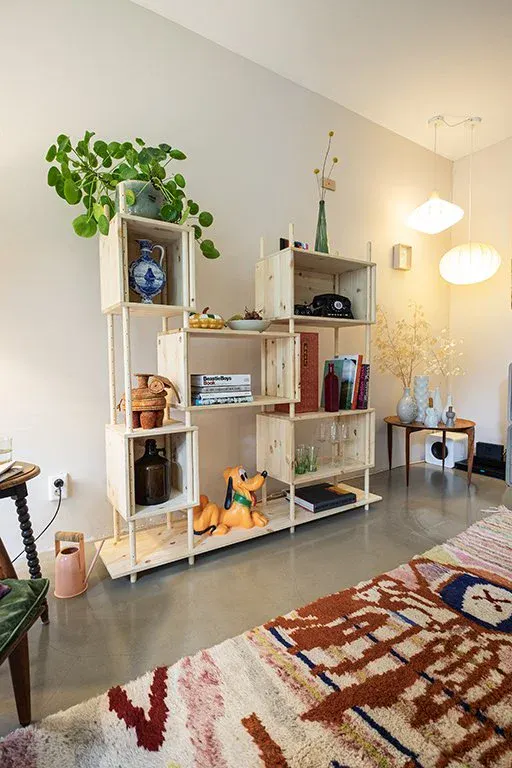
We will not stop questioning ourselves about what is actually needed. Even the first Regenerative Modular Cabinet project is already questionable: do we really need to store things, and does that not actively stimulate consumption? No, of course not — but people who are lucky enough to have their own safe space will use furniture to create an enjoyable living environment. Therefore the RMC is created, and we encourage people to only buy and store what is really needed. Designing a cabinet is counter intuitive to our regenerative mission when it is not needed or used to store non-regenerative products. Our designs will not stimulate the idea that you can enjoy furniture without wisely considering if it is really needed. The cabinet's philosophy aims to inspire its users and make them aware of their daily consumption choices.
3. Ecological value: preserve > restore > regenerate >
Preserve: the DIY kits actively stimulate the reuse of natural materials and components that are already active in the system. It is questionable whether all materials should be reused or recycled, because often negative side effects occur in doing so. We only encourage the reuse of materials that stay healthy when being adjusted.
Restore: all new materials produced through biobased_design are 100% biobased and 100% biodegradable and play a vital role in restoring our soil, reconnecting our communities and creating a healthier living environment. We play an active role in restoring nature.
Regenerate: all new materials are selected based on their multiple advantages, because they benefit the soil, vegetation, water, biodiversity and surrounding ecosystems. They should also be harmless for the environment and for people when harvesting, during production, processing and assembling. We interact with these materials as nature.
4. Avoid > reduce conflict
We select our materials consciously and carefully research the applications. Too often products consist of conflict and critical materials that do harm to our communities or environment. We make sure never to use resources that could better be used for food or other wiser functions, such as medical appliances. We utilize the materials to their full potential.
*The designs are created using computers, and the robots and machines that manufacture these designs may unfortunately still involve the use of conflict minerals and critical materials.
5. Appealing & Connecting &
Our design philosophy centers on creating products that outlive their initial users, making them readily available for the next user, and ensuring their lasting value in the regenerative market. Products are intended to be appealing to a broad audience and easily adaptable to individual preferences. They should help us connect to other individuals and natural beings.
6. Economical value: governance _ ownership _
We work with 4good_prices. This means the products have social and ecological returns throughout the entire supply chain, and not only create financial profit. biobased_design conducts dedicated research to identify all positive returns and, with its active network, supports the application of regenerative principles for all parties who join in the mission to create healthy living and enduring design.
We bring this to life with our regenerative governance and ownership model. With a stakeholder inclusivity approach we involve local communities, employees, customers, the environment and the next generation in decision-making. We prioritize a holistic, long-term and inclusive approach.
The goal is for biobased_design to become a steward-owned cooperative of designers, farmers, makers and users, so that we can create biobased_design regions all over the world.
7. Local _ Equity
Local: we will create local and short supply chains and use resources that are available locally and fit the local context. In every bioregion — a local social, ecological and economical context — there will be different active partners, creating collaborations between farmers, designers, producers and users.
Equity: the designs have a strong focus on being accessible and available for all people. Within a series there will be the possibility of a DIY kit and a price range that fits different groups.
Curious how we check whether we are really doing good? our research
Want to build this with us? join the community